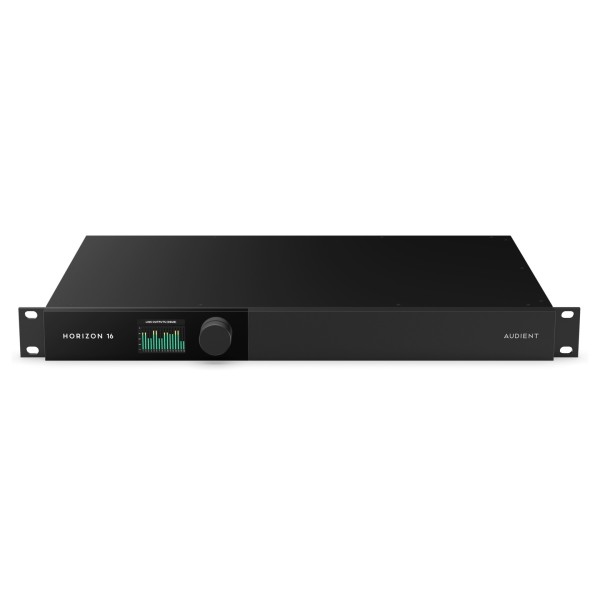
Audient Horizon 16 Thunderbolt 3 Audio Interface
-
-

-
-
-
-
-

Playing videos requires marketing & advertising cookies. By pressing Play, you consent to their use, which will override previously rejected settings. To update your preferences, see our cookie policy.
-
Playing videos requires marketing & advertising cookies. By pressing Play, you consent to their use, which will override previously rejected settings. To update your preferences, see our cookie policy.


This product will be available for purchase soon
Key Features
- High-performance 32-bit ESS converter
- Eight console-grade mic preamps offer rich, low-noise sound quality
- Switchable analog inserts enable seamless integration of hardware effects
- ADAT expandability provides up to 16 extra channels for versatility
- Comprehensive monitoring tools simplify studio setups with flexible outputs
Audient Horizon 16 Thunderbolt 3 Audio Interface Overview

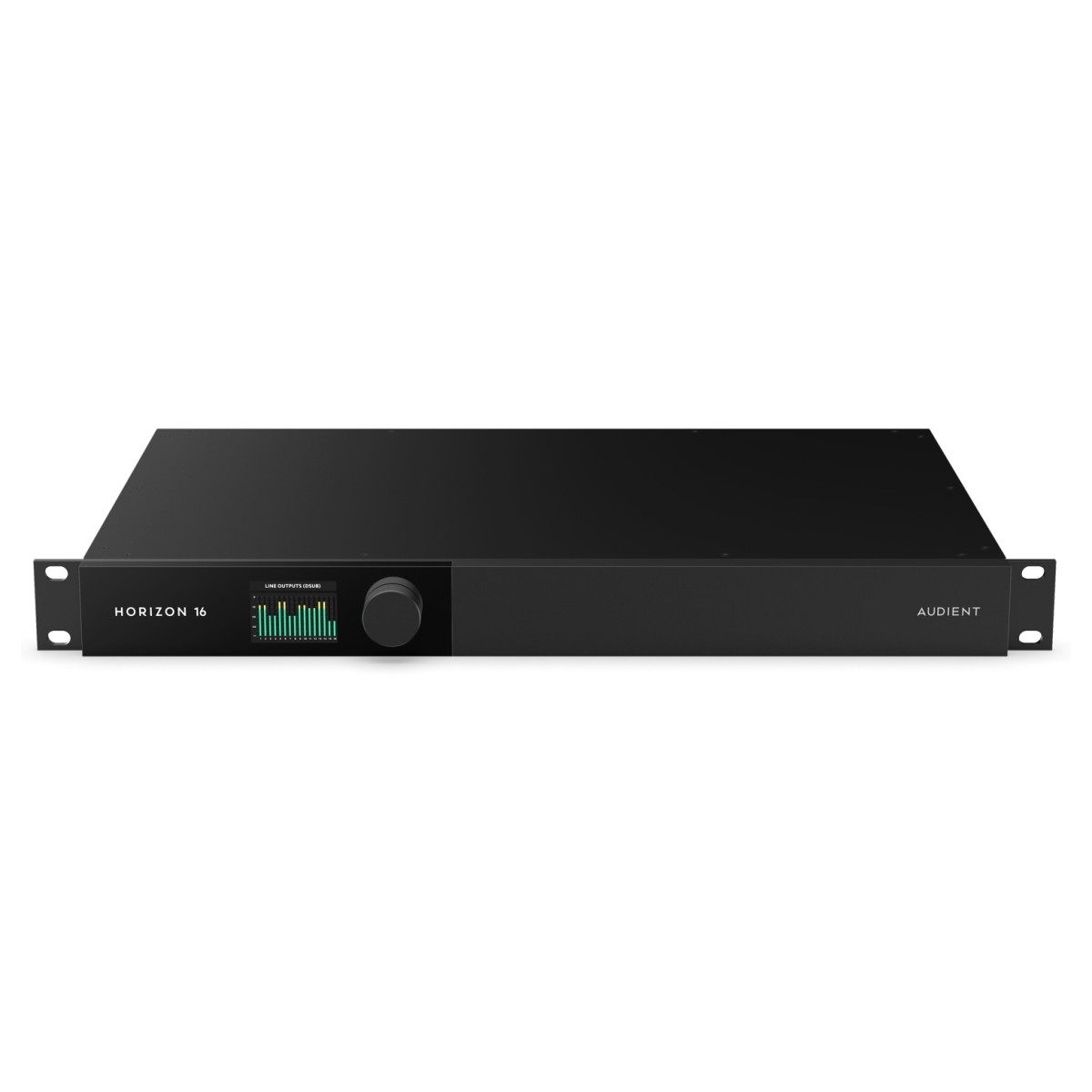
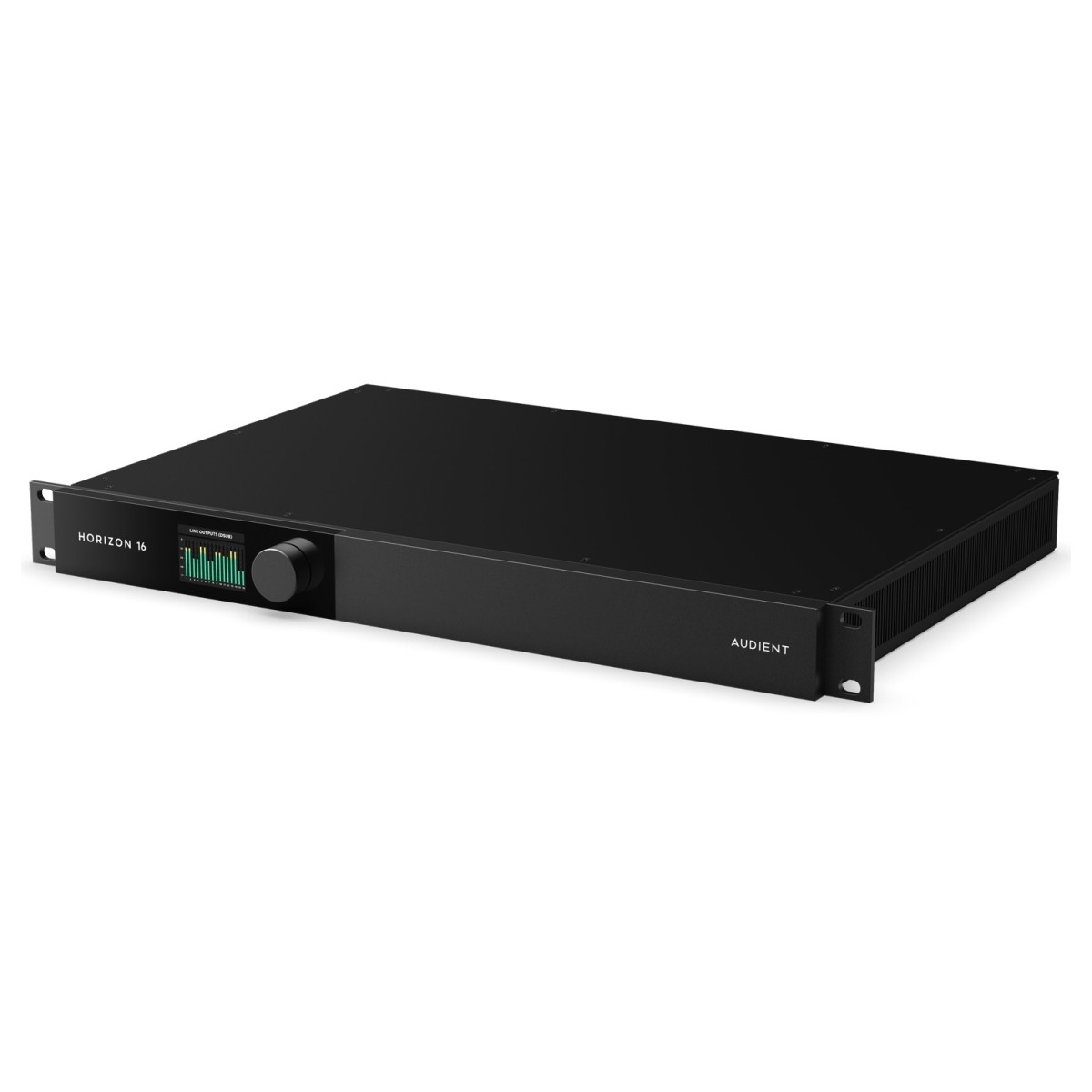
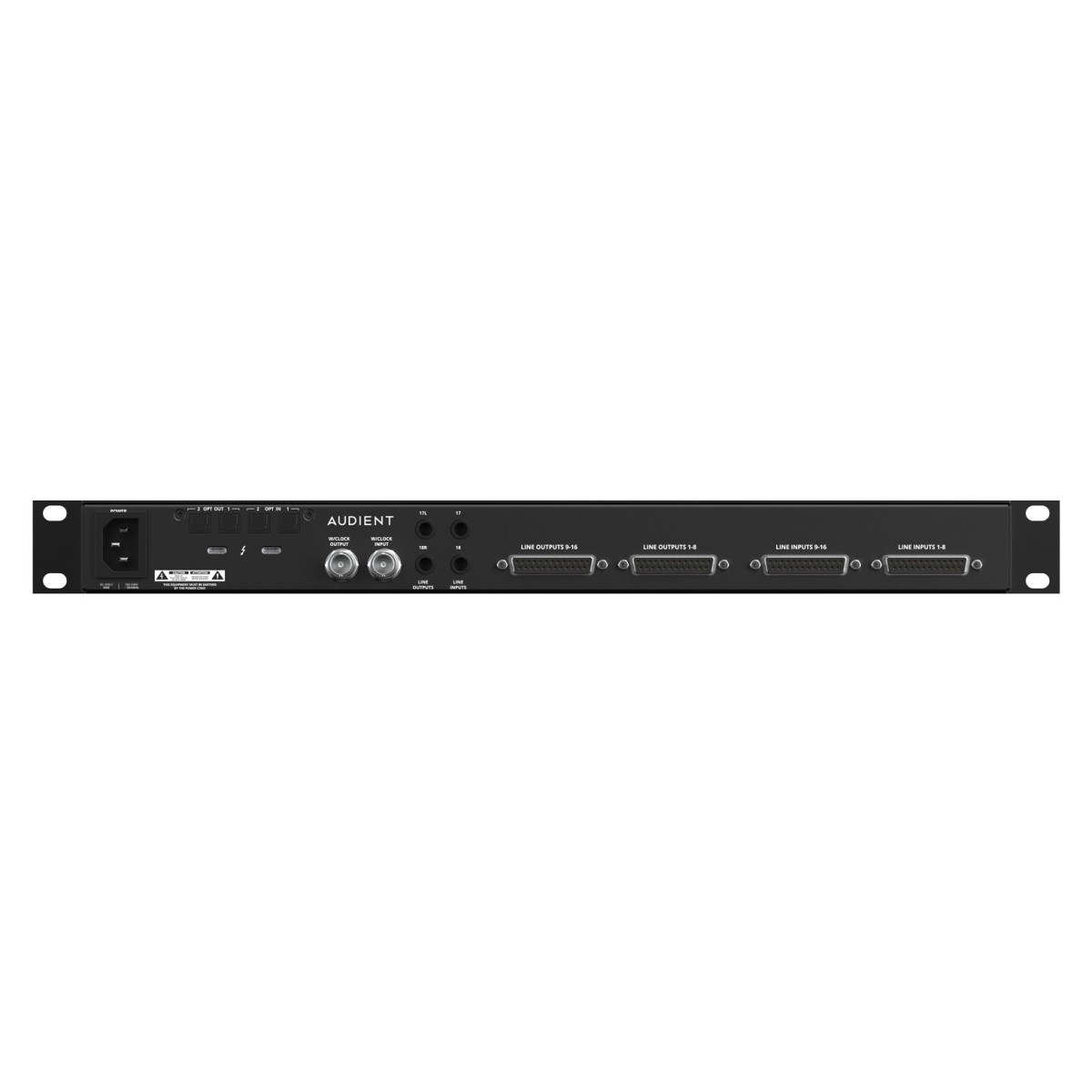
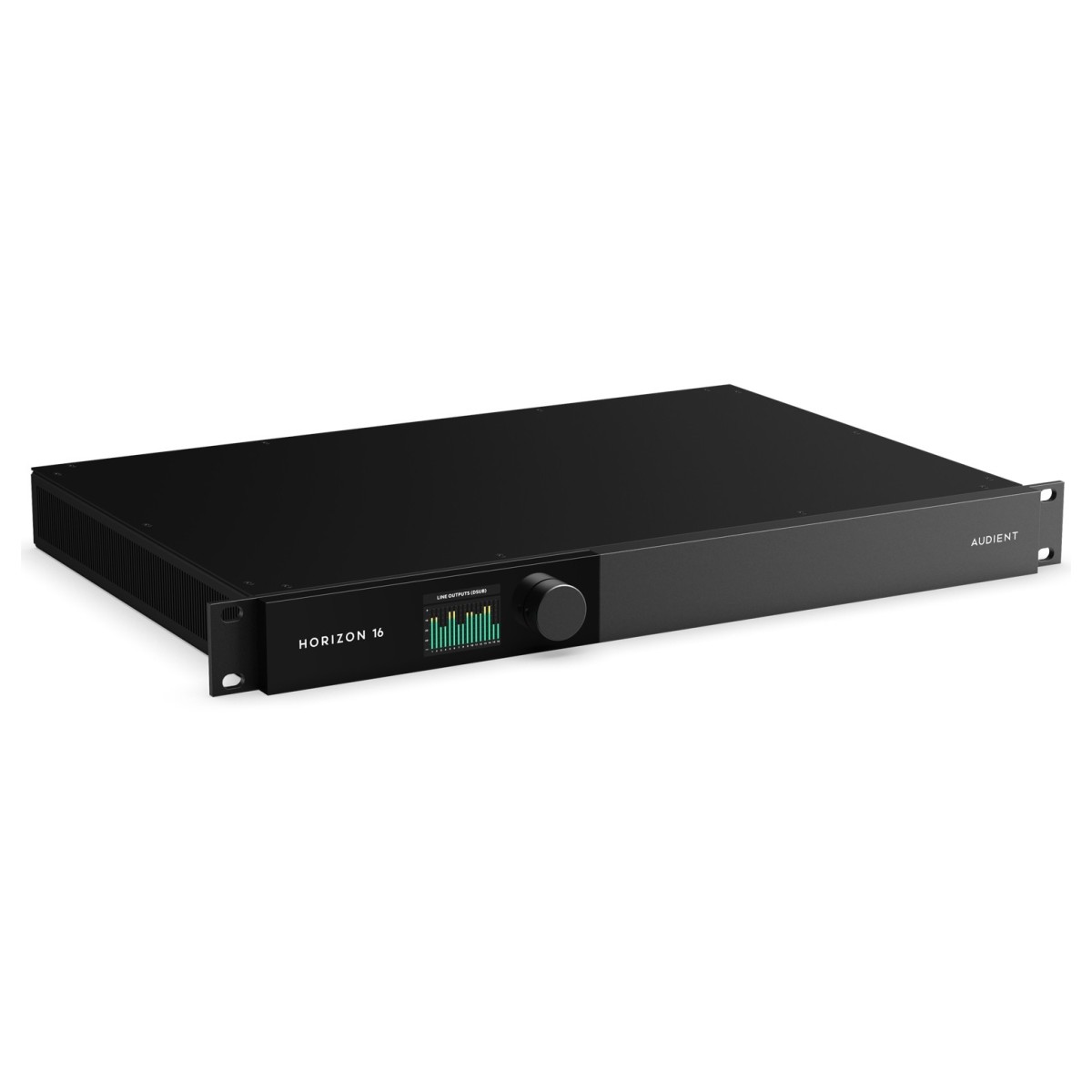
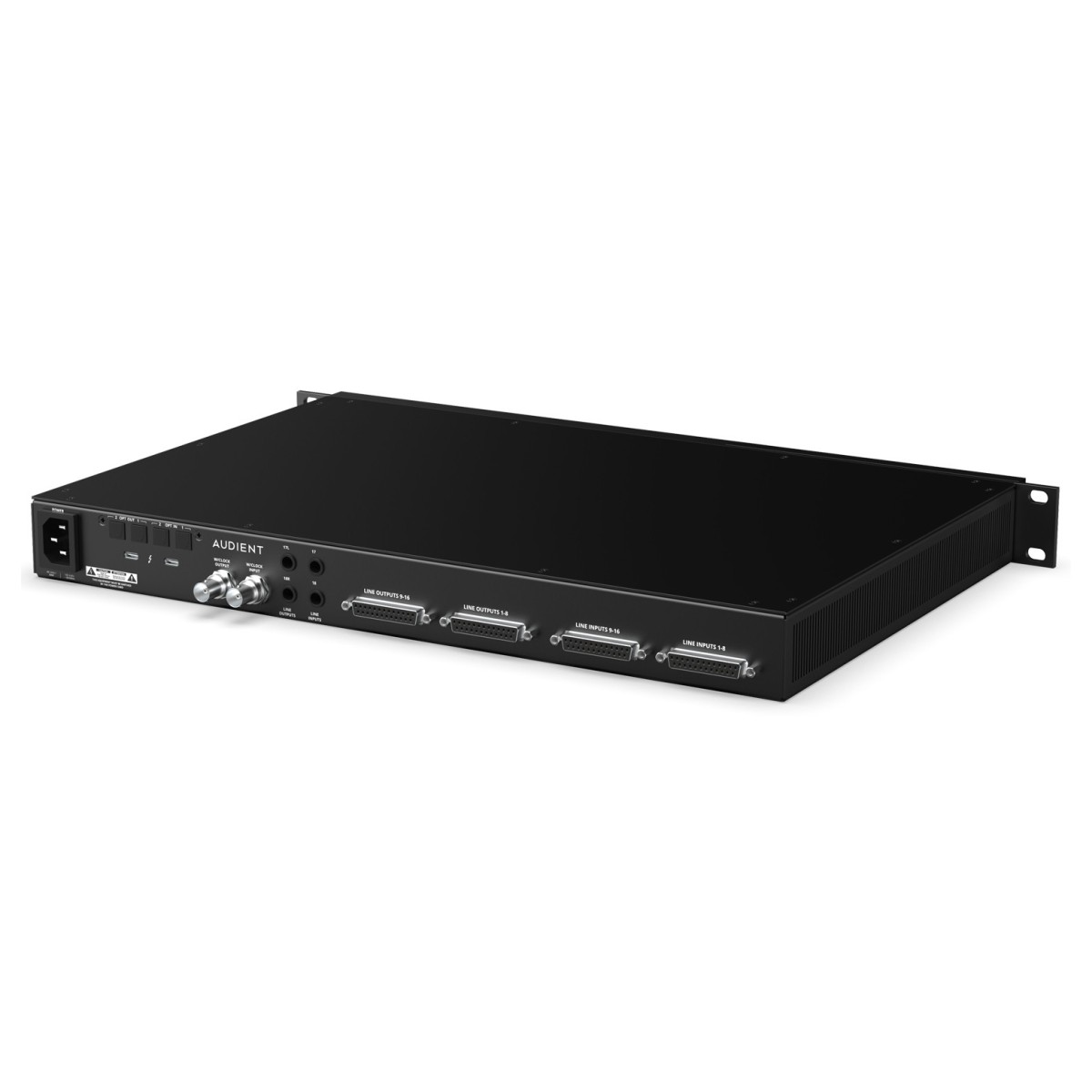
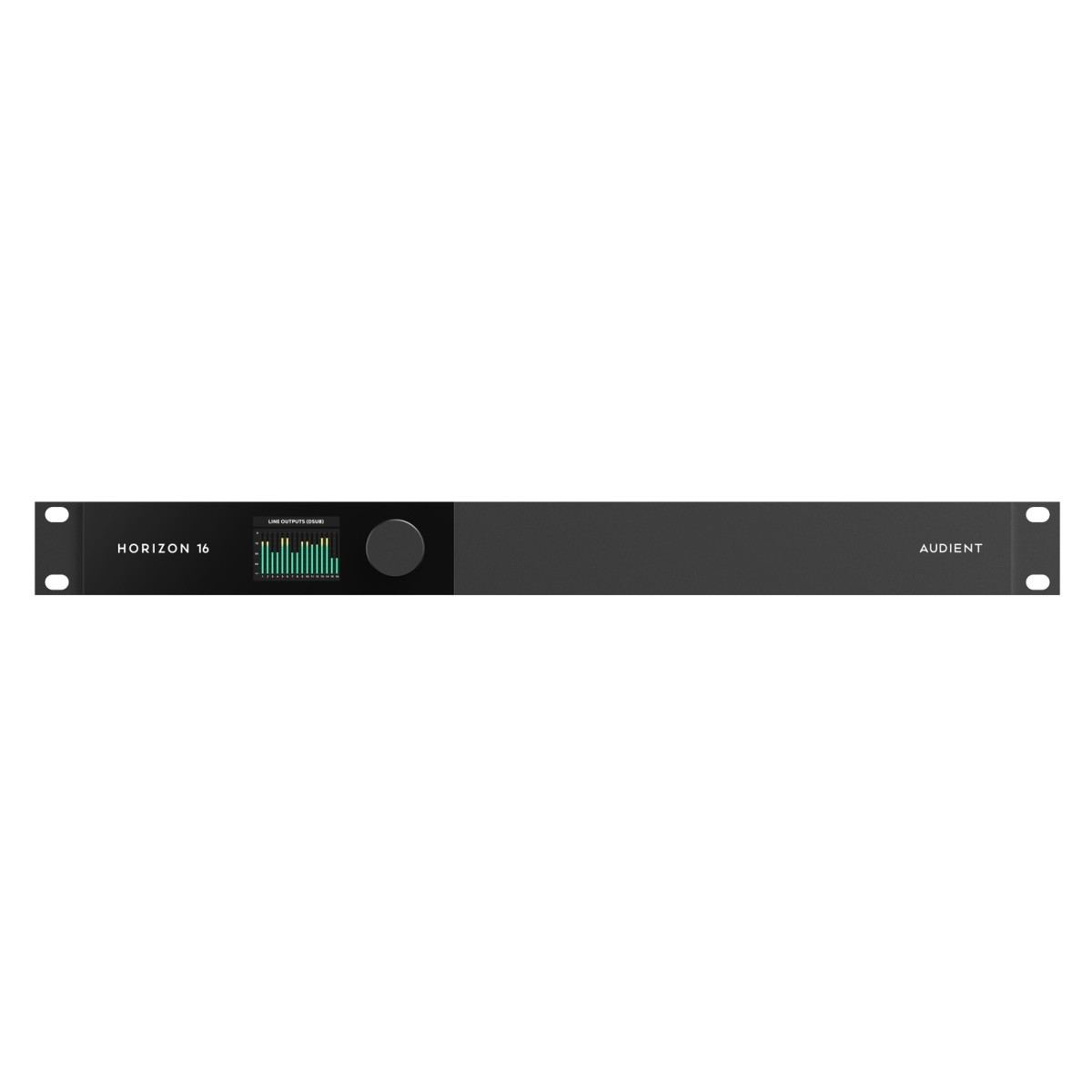
The Audient Horizon 16 Thunderbolt 3 Audio Interface is designed for engineers building flexible hybrid mixing and recording studios. Its 16 inputs and 16 outputs over four DB25 connectors let you keep compressors, EQs, summing equipment, and other analog hardware connected to your DAW.
Product Ref: 392099
Full Description
View Full DescriptionKeep your outboard permanently connected
If analog processors form a central part of your studio, the Horizon 16 gives you plenty of connections to keep them ready for each session. Sixteen line inputs and 16 line outputs are provided across four DB25 connectors, making it straightforward to integrate compressors, EQs, summing equipment, and instruments into a hybrid workflow.
Instead of repeatedly disconnecting and reconnecting hardware as sessions change, you can leave your outboard patched into the interface. Thunderbolt 3 carries a total of 34 inputs and 34 outputs, giving you extensive connectivity from a single 1U unit while keeping your hardware and DAW closely integrated.
Print mixes without sacrificing inputs
A dedicated stereo mix-bus input gives your final analog mix its own route back into the DAW. This means you can print the output from a summing setup or other hardware chain without taking over a pair of the Horizon 16's primary line inputs. Your existing connections can stay in place, helping you move between mixing and printing with fewer changes to your setup.
Dedicated stereo monitor outputs provide a separate path for reference listening, too. Advanced monitor controls include mono, polarity, dim, and reference level functions, giving you practical control over important monitoring tasks during a session.
Bring detail back into your DAW
The Horizon 16 uses 32-bit conversion with sample rates up to 192kHz and a 133dB dynamic range, designed to return signals from your analog equipment without adding unwanted colour. That makes it well suited to hybrid workflows where the sound of your chosen hardware is the part you want to capture.
Low latency also helps when combining analog equipment with software processing. At 192kHz using a 64-sample buffer, round-trip latency can reach 0.99ms, allowing native plugins to remain responsive during monitoring. Selectable +18dBu and +24dBu reference levels provide further flexibility when integrating the interface with studio hardware.
Route and expand from one system
Horizon Control gives you a central software panel for managing the interface, including a virtual patch bay, custom monitoring, extensive metering, and onboard comfort Reverb. Dual ADAT input and output adds up to 16 channels of digital expansion, while BNC word clock I/O helps integrate compatible digital studio equipment. And if your setup needs more analog or digital connections later, the Horizon architecture can grow with it.
Up to four Horizon units can be daisy-chained on a single driver, supporting a maximum system size of 200 inputs and 200 outputs. This scalability lets you expand without moving to a completely different interface platform.
Features
- 34-input and 34-output Thunderbolt 3 audio interface for hybrid studio workflows
- Sixteen analog line inputs and sixteen line outputs across four DB25 connections
- Separate stereo mix-bus inputs simplify recording the final master back into the DAW
- Dedicated stereo monitor outputs provide an independent reference listening path
- 32-bit audio conversion supports sample rates up to 192kHz with 133dB dynamic range
- Ultra-low 0.99ms round-trip latency at 192kHz with a 64-sample buffer
- Dual ADAT connections add up to sixteen channels of digital expansion
- Horizon Control software combines virtual patching, configurable monitoring, comfort reverb, and detailed metering
- Integrated monitor functions include mono, polarity, dim, and reference level controls
- Switchable +18dBu and +24dBu operating levels accommodate different studio equipment
- BNC word clock connectivity supports reliable digital synchronization
- Expandable system allows as many as four Horizon interfaces to operate from one driver
- Multi-unit configurations support up to 200 inputs and 200 outputs
- Rugged all-metal construction fits into a single rack space
- Compatible with macOS and sessions running at sample rates up to 192kHz
- Covered by a three-year manufacturer warranty
Specifications
- Product Code: APACAU33-HORIZON16
| Reviews of our service
View all